
Start with the closing pattern
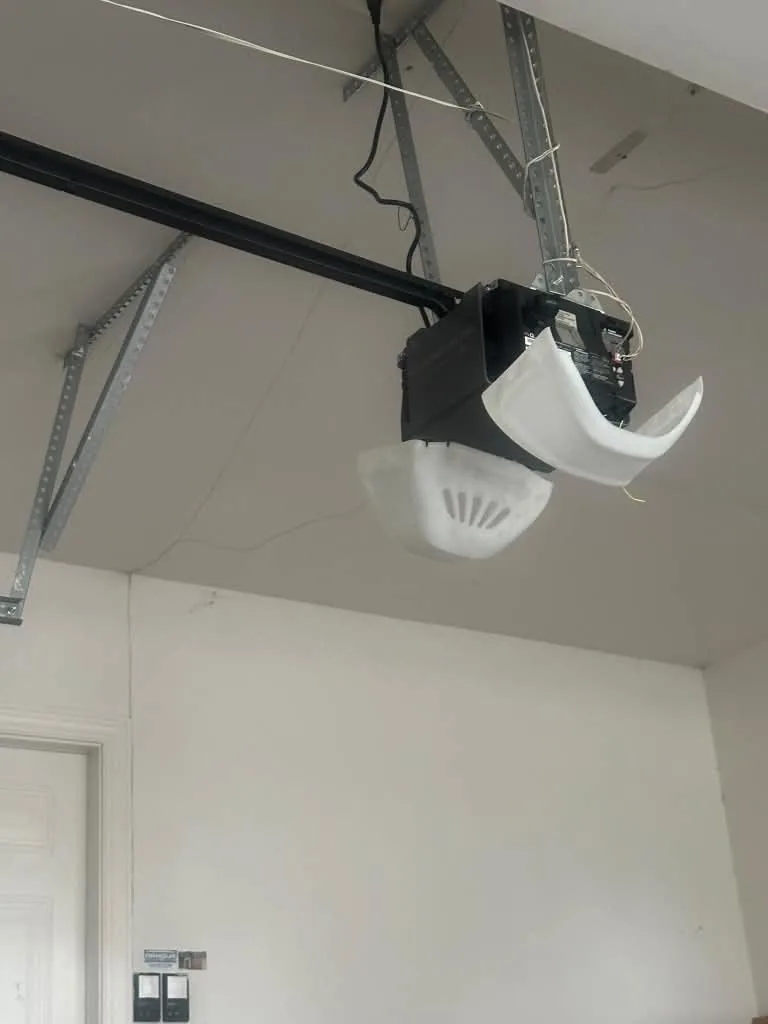
Tell the service provider whether the door refuses to close, moves briefly and reverses or behaves differently with particular controls. Record the opener make, model and any naturally visible light sequence. Sensor colors and diagnostic codes vary between products. A light that is normal on one model may mean something different on another, so use the exact manual rather than a general chart copied from an unrelated opener.
Separate an obstruction from equipment failure
An object in the sensor path, a damaged or displaced sensor, a connection issue and a door-travel problem are different possibilities. From a safe place, check whether the opening is clear and whether there is obvious physical damage. Do not touch wiring, relocate equipment or repeatedly operate a damaged door. Tell the technician whether the problem began after stored items moved, an impact, water exposure or other work nearby.
Alignment is not the whole safety check
A proposed repair should explain whether the cause is sensor placement, the equipment, its wiring or another condition. Ask how the repair will be verified using the manufacturer's procedure. Lit indicators alone do not establish that the door's full safety system works correctly. Reversal and travel behavior, door condition and the operator's required checks still matter after a sensor-related repair.
Use compatible equipment
Safety sensors are not universal accessories. Confirm the exact replacement part and its compatibility with the opener before ordering. If the recommendation includes a new operator because a part is unavailable or other faults exist, ask for that reasoning separately. Do not bridge terminals, defeat the beam or change force settings to achieve closure. A door that closes after protection is bypassed has not been repaired.
Arrange the next step safely
If the opening cannot be closed normally, keep people clear and explain the access or security problem when you contact I-95 Garage Door. Confirm the supported model and assessment availability. Request the diagnosis, parts, labor and final safety verification in the estimate. Do not include access codes in the enquiry, and do not stand in the doorway to demonstrate whether a sensor detects you.
Explore your next step
Sources and useful references
- Chamberlain Group: Garage Door Opener Diagnostic Codes
- LiftMaster: Model-Specific Opener Owner Manuals
- CPSC: Non-Reversing Automatic Garage Door Openers Are a Hazard (PDF)
Use the current official source and your product manual for requirements that apply to your address or model.