
Know the difference between a symptom and a cause
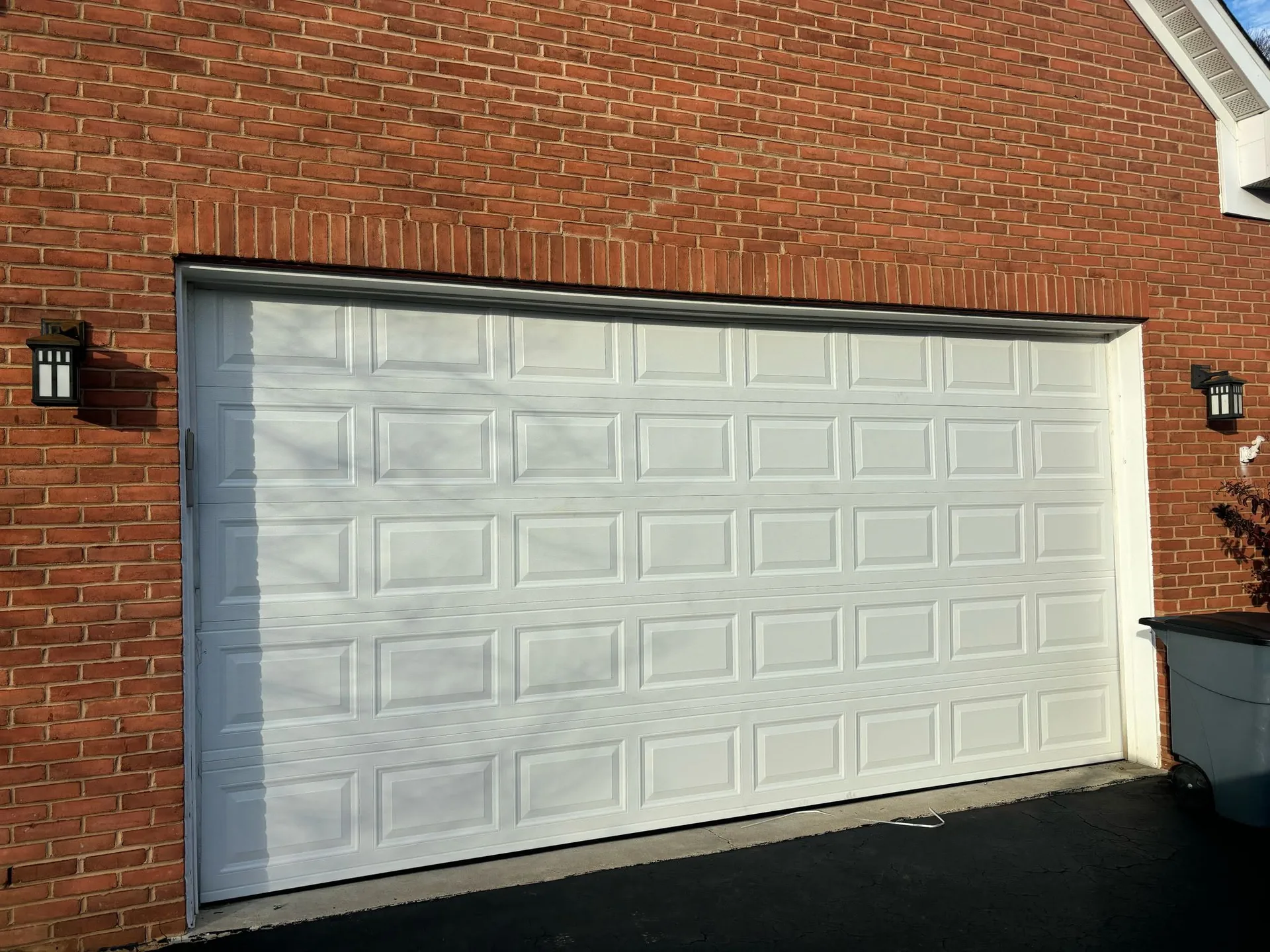
A roller outside its track is visible evidence of a problem, but the cause may involve an impact, damaged track, lifting hardware, worn components or more than one condition. A sloping bottom edge can also occur without an obvious roller outside the track. Describe what is visible and what happened beforehand. Do not assume that the track simply needs bending back because one area looks out of line.
Keep the work area out of use
Stop using all controls and prevent other occupants from operating the door. Keep vehicles, pets and people clear of the opening and the area below suspended sections. Do not stand beneath the door, prop it up with household items or pull the emergency release on an unstable raised door. If a normal route is blocked, use another safe entrance instead of squeezing through the remaining gap.
Assess damage across the assembly
Ask the technician to check the affected track, rollers, hinges, sections and lifting system. Supporting attachments and the opening itself may also need review after an impact. The proposed repair should explain how the door will be restored to its intended path and how the underlying cause will be addressed. Merely returning a roller to the channel does not establish that the rest of the system is undamaged.
Repairable track or replacement components?
The choice depends on the location and severity of deformation, compatible parts and the manufacturer's requirements. Ask which parts can remain and what evidence makes replacement necessary. Damage to a door section or structural support can expand the work beyond track alignment. Request separate scope for those issues, and avoid a quote that promises the same adjustment for every off-track door without inspecting its condition.
What to share when requesting help
Tell I-95 Garage Door the city, whether the door is raised or closed, which side looks displaced and whether an impact occurred. Take only photos that can be obtained without approaching unstable equipment. Confirm supported repair scope and availability. Ask what travel, balance, attachment and opener-safety checks are included after repairs, and what to do if unusual movement returns before the next planned maintenance review.
Explore your next step
Sources and useful references
- Clopay: Garage Door Safety Checklist
- CPSC: Non-Reversing Automatic Garage Door Openers Are a Hazard (PDF)
Use the current official source and your product manual for requirements that apply to your address or model.